Faeth Therapeutics
Applying empathy and data storytelling to redesign the experience of cancer patients in clinical trials
Role
Product Designer
Industry
Health
Duration
3 months
About the client
Faeth is a data-driven, evidence-based company with a deep mechanistic understanding of the way that nutrients influence tumor growth and cancer treatment. Their discovery platform matches tumor genotypes with treatment regimens combining therapeutic targets and precision metabolic optimization to improve patient outcomes.
Stage 1. Understanding the problem
As part of the nutritional monitoring of elderly patients undergoing cancer treatment, the platform presented a graph that indicated amino acid levels, based on a ranking from 0 to 100. The idea was to help patients understand their progress and make more conscious decisions about their diet.
However, the graph was difficult to interpret and used colors such as red, yellow and green, which ended up generating anxiety — even in situations that did not require so much concern.
Stage 2. Our challenge
Provide clinical trial patients with an engaging and easy way to visualize their amino acid levels along with advice while keeping them committed and motivated to their treatment.
Stage 3. Prototype Development
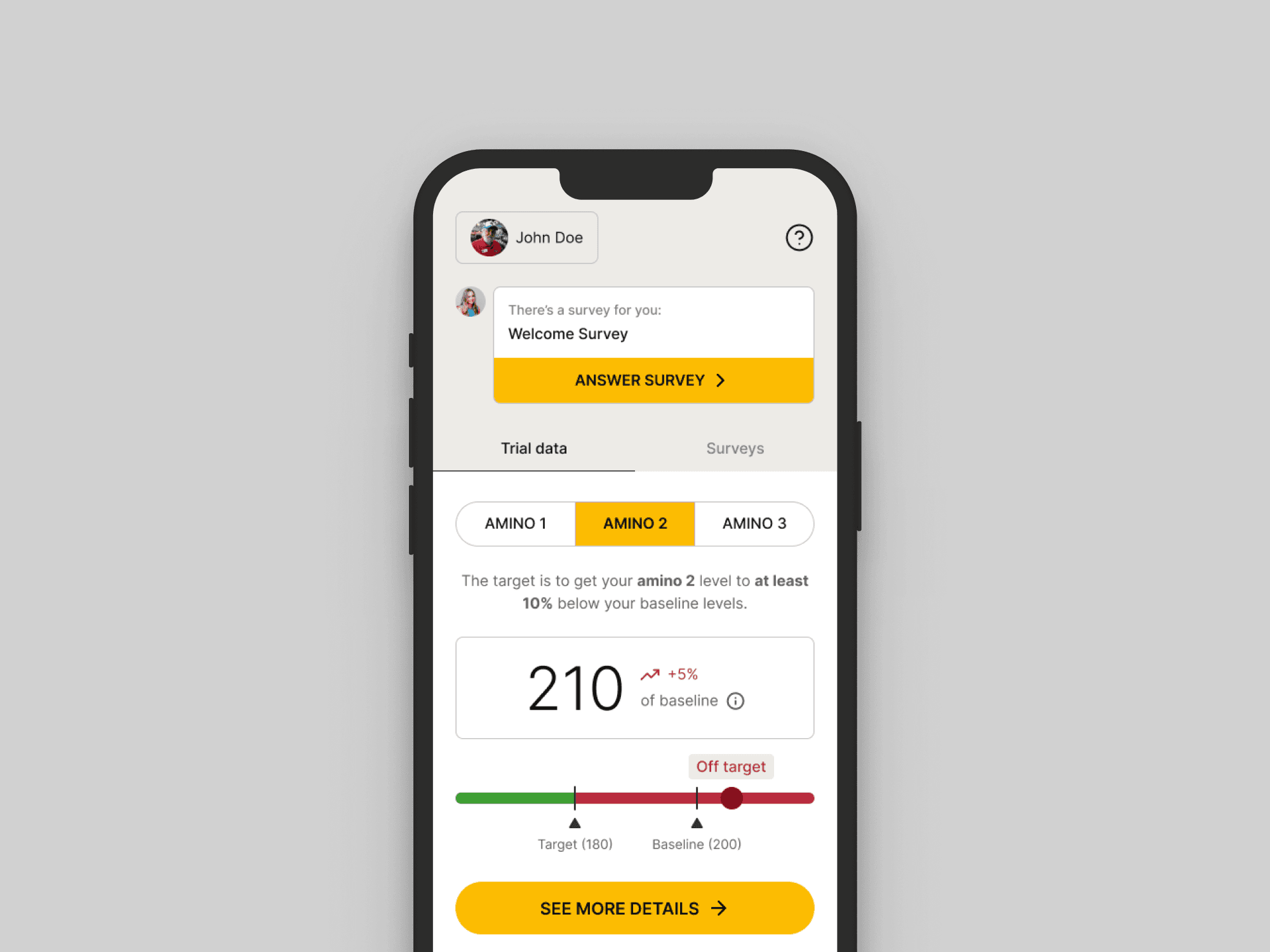
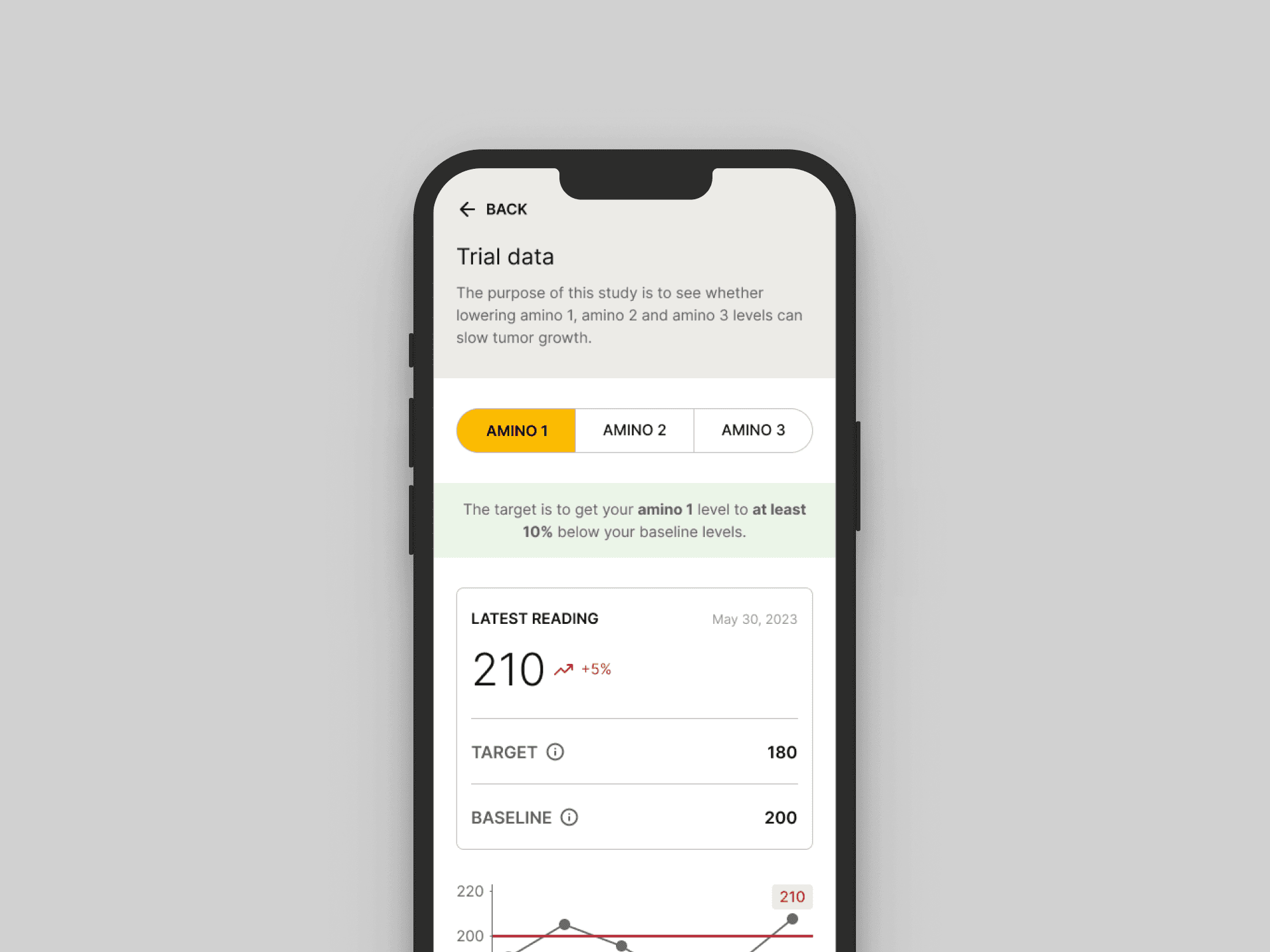
To find the best way to present data to patients, we went through three rounds of tests with different visual approaches and interface proposals.
Wireframing: We explored various data visualization chart types, experimented with UX writing to craft motivational language, and, most importantly, identified an overall score for the amino acid measures used by the clinical trial researchers.
User feedback and refinement: With each new version created, we held feedback sessions as a team, where we carefully analyzed the user experience and identified critical points for improvement. This iterative process was essential to refine ideas, validate hypotheses and evolve the design until we reached a clear, functional and more welcoming solution for patients.
Stage 4. Implementation
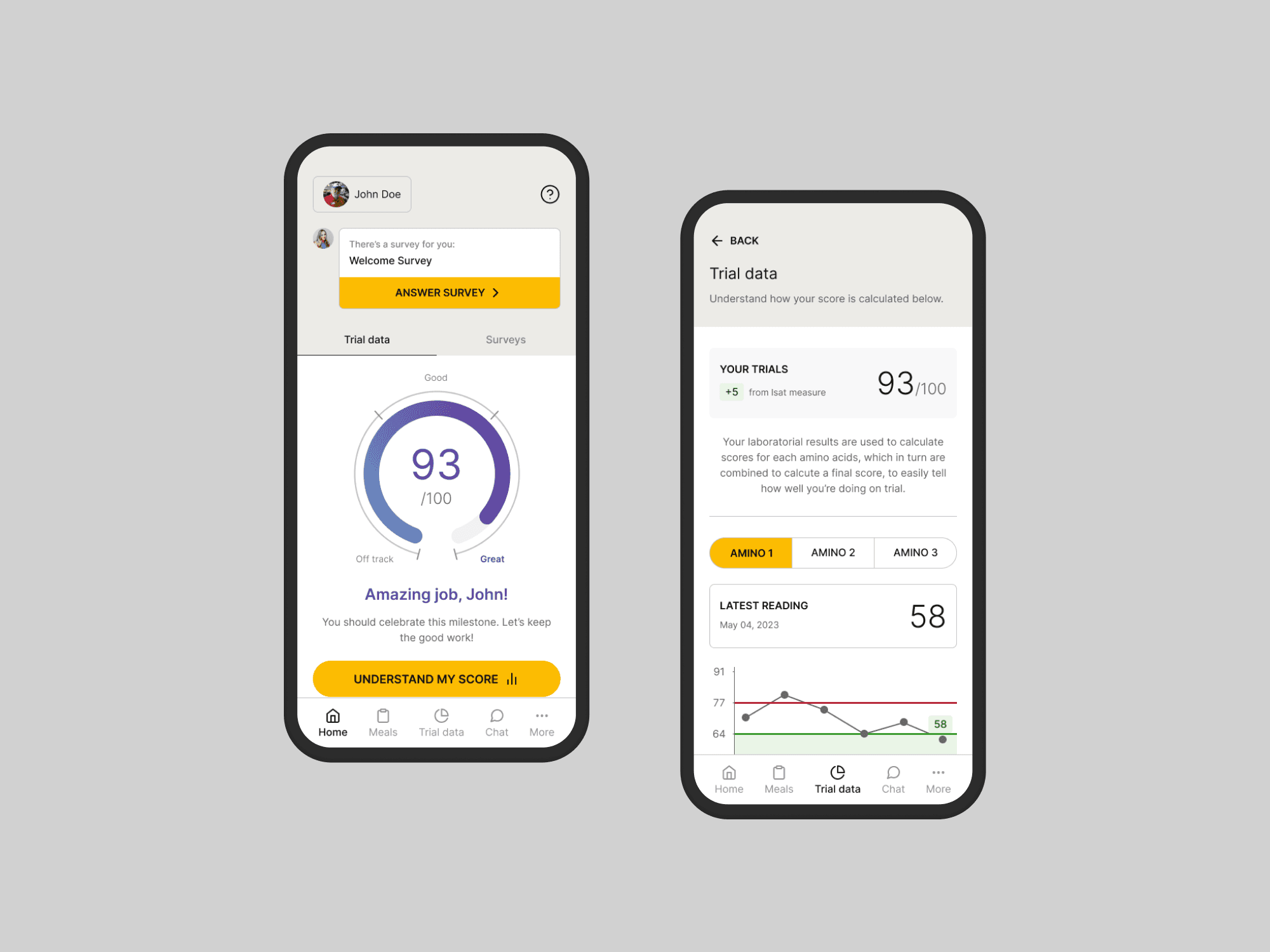
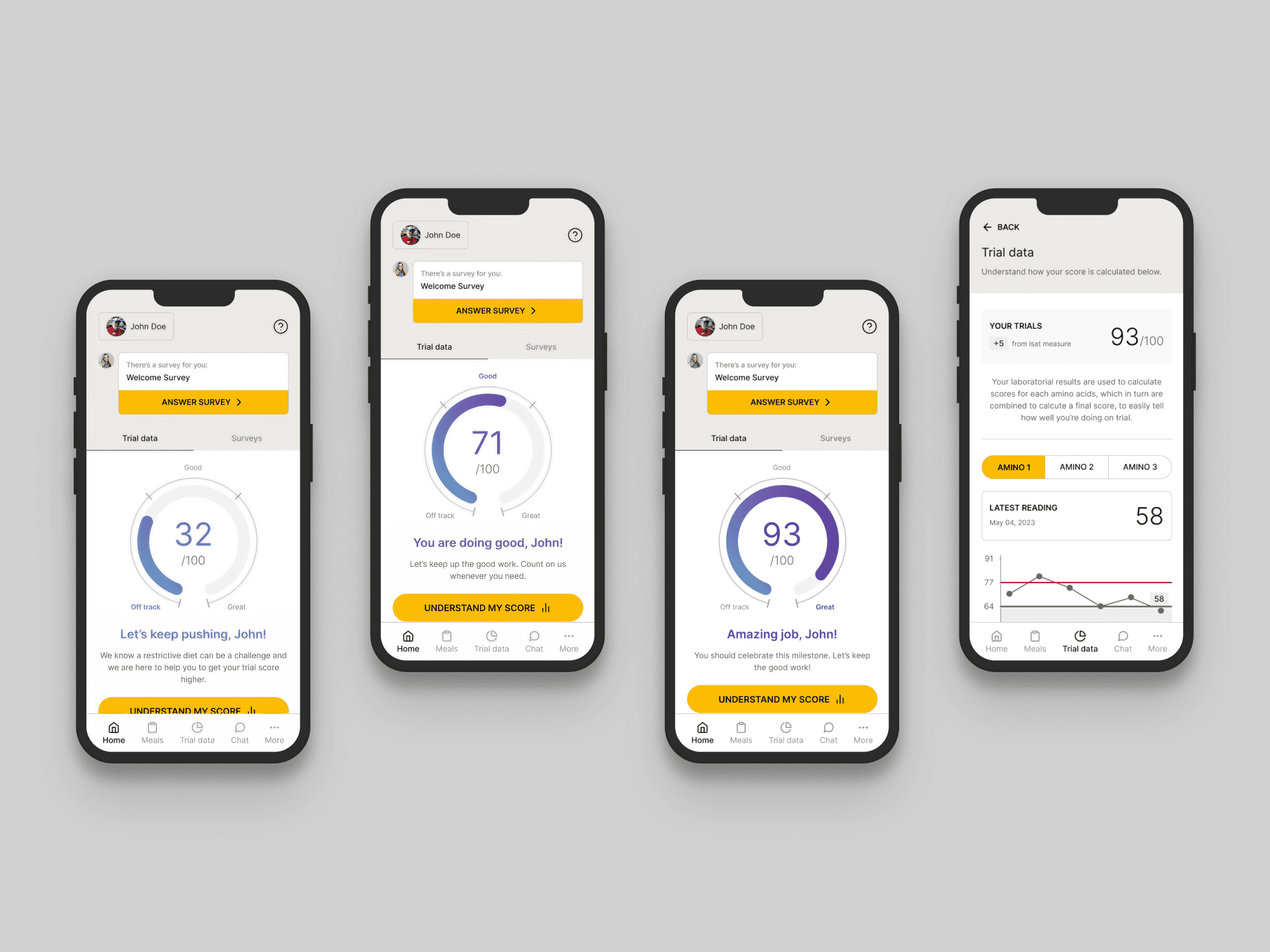
After a few rounds of tests and new ideas, we reached a satisfactory result: a gauge-like chart with an overall amino acid score, calming blues and a motivational new colors fostering engagement, reducing anxiety, and promoting progress tracking.
Outcomes
The redesigned clinical trials app received overwhelmingly positive feedback from users, who praised its improved usability, engaging design, and motivational features. The project was a significant learning opportunity, enhancing my understanding of user-centric design principles and the impact of design on user behavior and app retention.
Project main impacts
Identified key pain points in clinical trial software and reduced friction by conducting several user interviews and usability tests
Improved collaboration and team efficiency, speeding up ideation cycles and feature prioritization through 12 design workshops with multidisciplinary teams
Achieved a 40% increase in user compliance through design and launch of key features
Improved time efficiency by 50% for internal users by designing automated processes